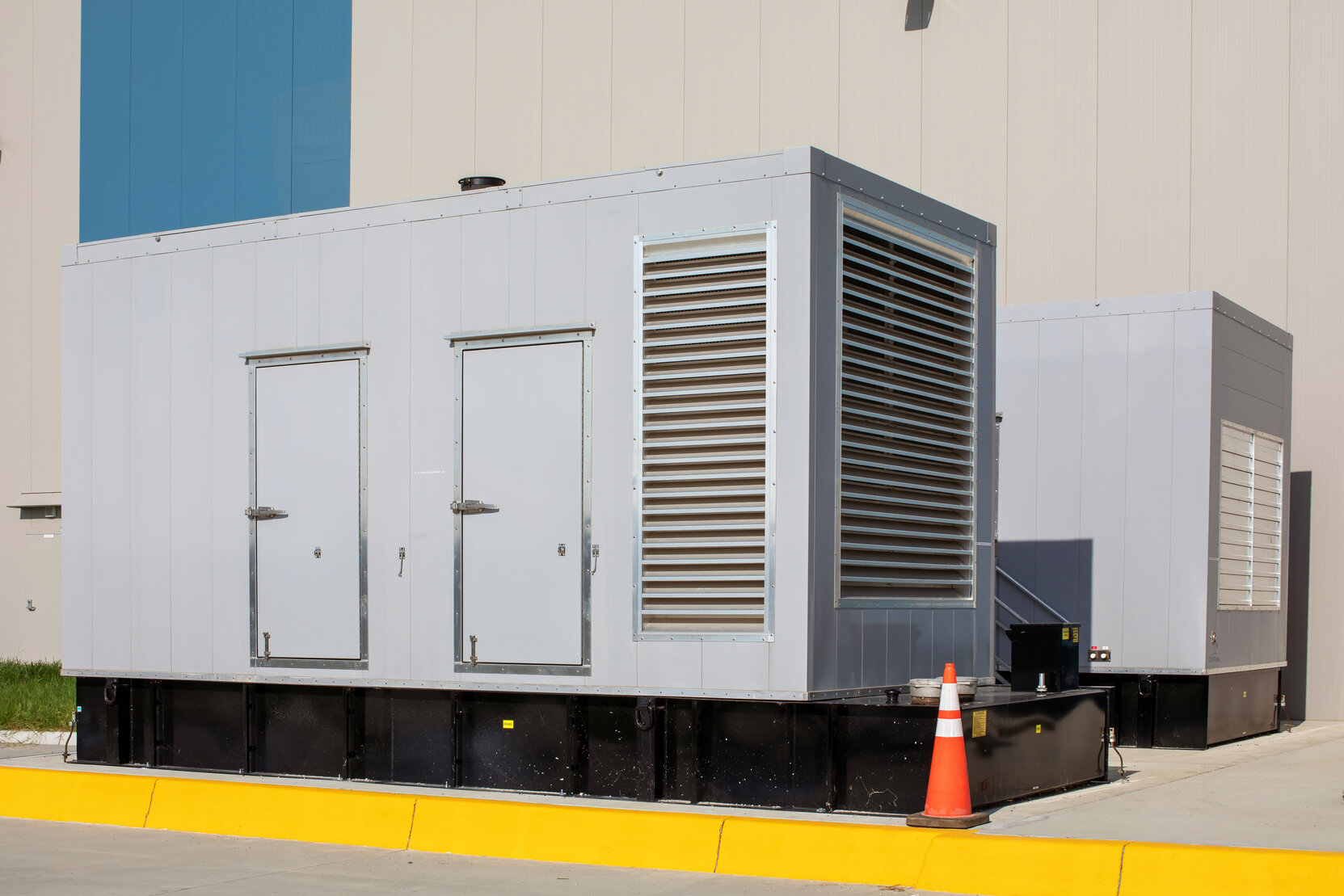
When businesses think about backup power, most of the attention goes to the generator itself. The engine starts, fuel is available, maintenance is current, and everything appears ready.
But another component can determine whether that backup power ever reaches the facility: the automatic transfer switch.
October is a good time for facility managers to evaluate the complete emergency power system after months of summer demand and before temperatures begin changing across Texas.
Quick answer: An automatic transfer switch, or ATS, coordinates the transition between normal utility power and backup generator power. If the ATS does not operate correctly, a healthy generator may still be unable to deliver emergency power to the systems that depend on it.
What Does an Automatic Transfer Switch Do?
The ATS connects the utility source, generator system, and facility electrical load.
When normal utility power is lost, the backup power system must recognize the outage, start the generator, and transfer the appropriate electrical load. Once stable utility power returns, the system eventually transfers back.
Because much of this happens automatically, an ATS can be overlooked during everyday facility operations.
What Causes Automatic Transfer Switch Problems?
Transfer-switch problems can involve controls, wiring, components, communication issues, or abnormal transfer behavior.
Some failures create an obvious alarm. Others may not become apparent until the system is tested or a real utility outage occurs.
That is one reason starting the generator alone does not provide a complete picture of backup-power readiness. A commercial generator can run normally while another part of the emergency power system prevents a successful transfer.
AGS provides inspections and repairs for generators, engines, and ATS units and also offers control-panel repairs and 24/7 emergency field support.
Can Remote Monitoring Detect ATS Problems?
Remote monitoring can give facility managers greater visibility into what is happening between scheduled inspections.
AGS installs and supports remote monitoring solutions that can help identify automatic transfer switch malfunctions along with low batteries, battery-charger problems, block-heater failures, shutdown alarms, insufficient fuel, and operator errors.
For organizations managing multiple generators, several buildings, or equipment that is not constantly staffed, that added visibility can help identify a problem before the next outage.
Why Testing the Complete Backup Power System Matters
A generator exercise may demonstrate that the engine starts. It does not necessarily prove how every component will perform when emergency power is actually needed.
Load bank testing provides another way to evaluate generator performance under a controlled electrical load. AGS offers load banks ranging from 100 kW to 2,000 kW and provides testing as either part of a preventative maintenance plan or a standalone service.
Depending on the facility and applicable requirements, testing and documentation may also play a role in regulatory or insurance compliance.
Do Not Maintain Only Half of Your Backup Power System
Reliable emergency power depends on more than the generator engine.
The generator, automatic transfer switch, controls, fuel system, electrical components, distribution system, and ongoing maintenance all have to work together.
AGS’s preventative maintenance program uses an 80-point inspection covering major engine and generator systems and is designed to identify potential failures before they turn into unplanned downtime.
Schedule an ATS and Generator Inspection
October is a practical time to confirm that the entire backup power system, not just the generator, is prepared for the months ahead.
Contact Allegiant Generator Services to schedule an ATS inspection, commercial generator inspection, preventative maintenance visit, repair, or load bank test.
Allegiant Generator Services
Address: 22057 Morton Ranch Rd, Katy, TX 77449
Phone: (832) 499-1866
Email: [email protected]
Website: AGS-NA.com